For every matter
Every matter in one file: its papers, evidence, service, law and deadlines, with what needs you named in a sentence.
The product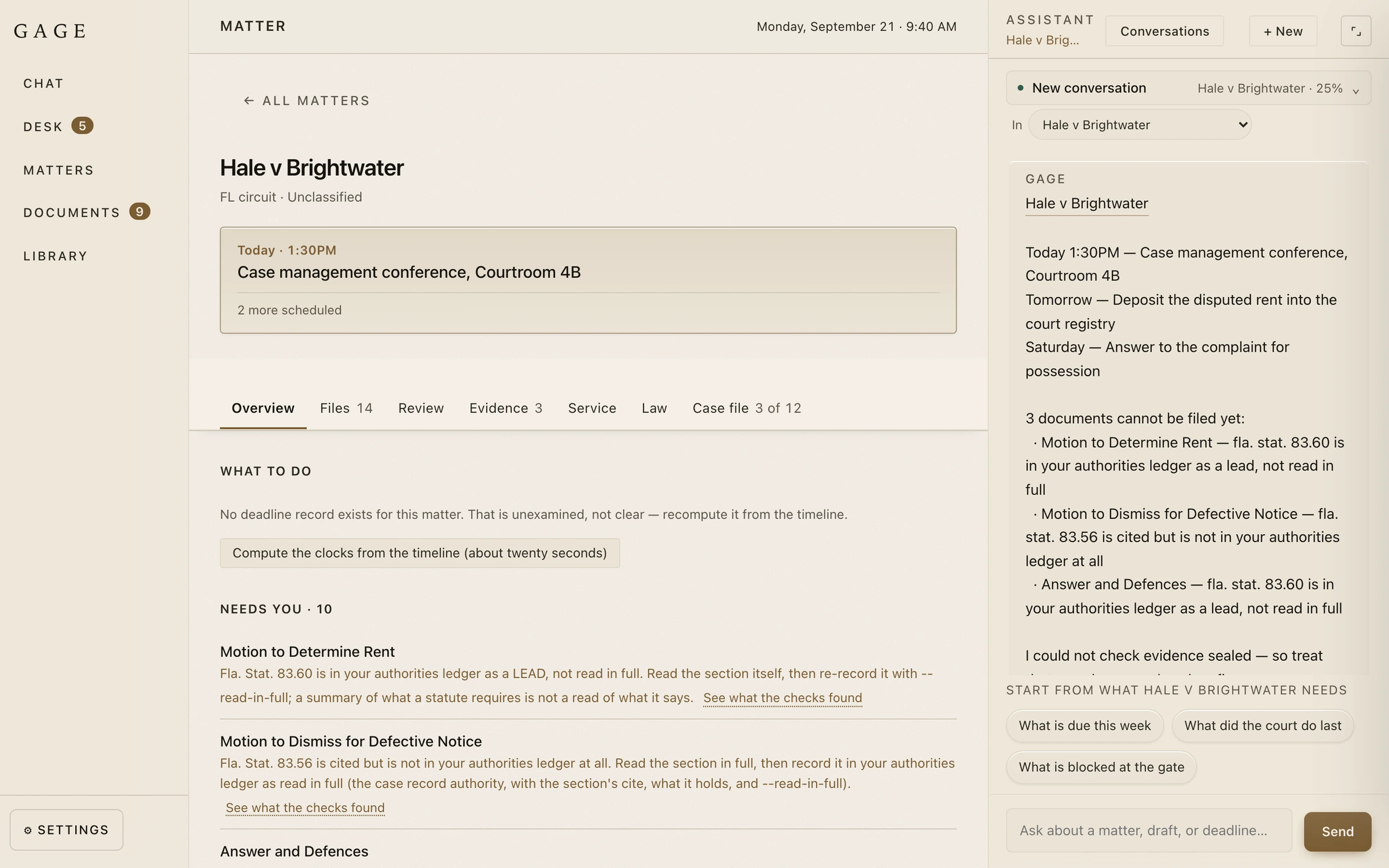
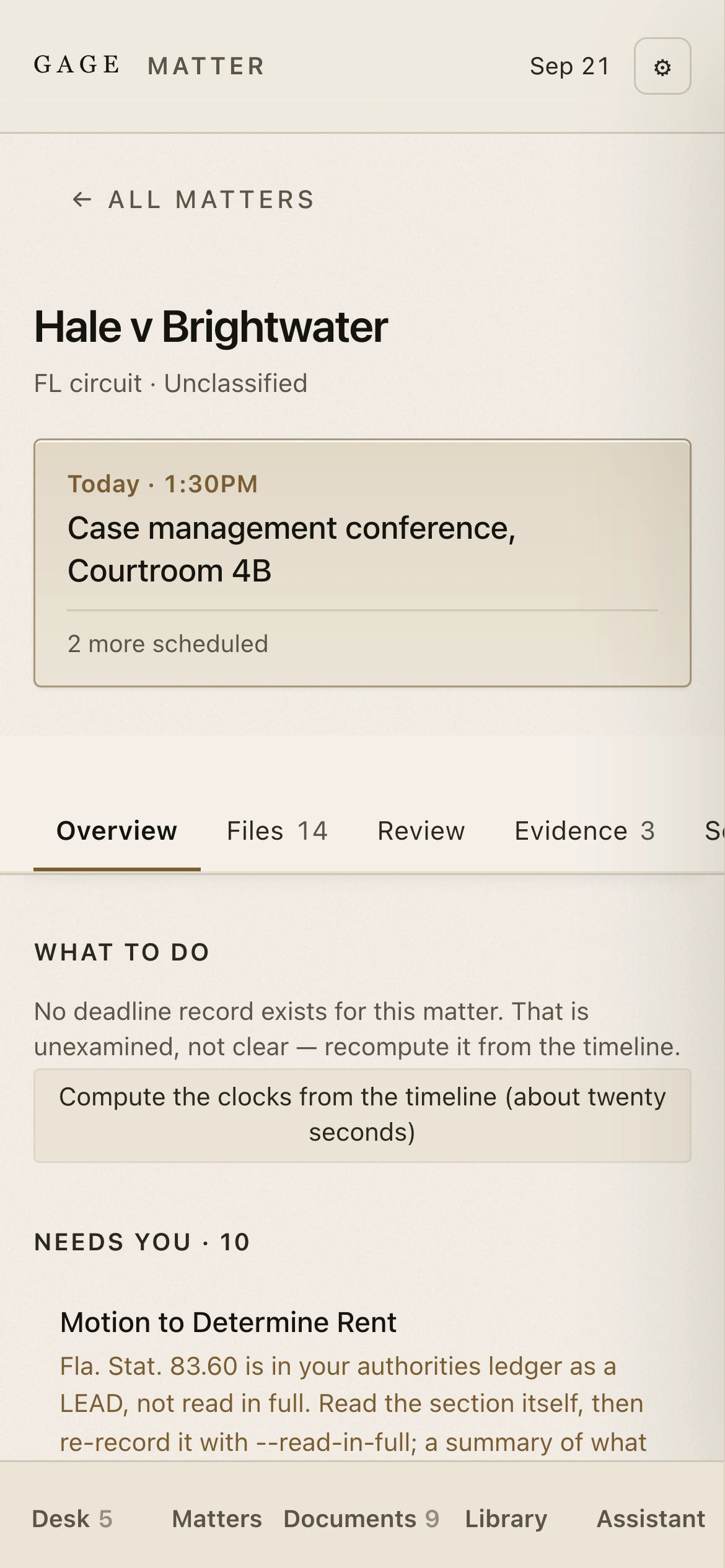
Every matter you carry — its record, its clocks, its authorities — held whole, on your own machine.
Each one is exercised against the specific defect it exists to catch, on material it was never built from, and has to be watched failing before it is trusted to pass.
The last figure is the one that matters. A check exercised only against a missing file proves that it notices absence — not that it catches a plausible error in a document that looks finished.
Frontier systems generate text. Practice software files it away. Neither one measures your paper against the rule of the court it is going to — and that is where papers are returned.
No headnote, snippet or summary stands in for an opinion. An authority enters your paper only after its whole text has been read. In a brief filed this year: 90 citations, 90 verified against the full opinion, none fabricated.
The declaration one state prescribes is not the declaration the federal rule accepts, and neither satisfies the next state. A verification that is valid in one forum is a defect in another. Every paper is measured against the rule of its own forum, read from the rule’s own text — never from a summary of it.
76 stages stand between a draft and a court, and every one is invoked on every paper. A draft that fails a stage does not leave. A model asked for a filing will always produce one.
Matters, evidence and drafts stay on the computer the kit runs on. Questions are answered on hardware we own, and the question text is not stored. Privileged work product does not go to a third party’s cloud to be read.
Nothing leaves unexamined, and what examines it depends on what it is. A motion is measured against the rule of the court it is bound for. A land contract, an NDA, a licence or an employment agreement is measured against the statute that makes it enforceable — and against how it reads from the other side. Two batteries, because the ways a court paper fails and the ways an agreement fails are not the same ways.
No case is cited until the opinion has been read in full — not a headnote, not a snippet, not a summary. Each is then checked for what the majority actually held, whether the court reached it, and whether it is still good law.
The standard of review, who carries the burden and the relief sought are each stated with the authority that sets them. Every authority the other side cited is answered rather than left silent.
Caption, margins, page limits and the filing packet measured against that court’s own rule — and a refusal to draft into a court whose procedure we do not hold, rather than applying another state’s by default.
Every fact traces to the document it came from. A search result, an internal note or an earlier draft of our own is a lead to read, never a source to cite.
Someone goes looking for what kills the argument before opposing counsel does, including the authority that cuts against us.
Exhibits numbered without collision, legible at the size they will be read, and reconciled against what the paper says was served on whom.
Nothing regenerates after signature, and nothing leaves without the approval on the record. A signed paper is frozen.
No “next Tuesday”. Every deadline computed from the rule that sets it and carrying that rule’s citation, so a date can be checked instead of trusted.
Every party’s identity and role verified from a primary source — no title inferred from a name — and personal data held out of what gets filed.
Every figure reconciles against its exhibit, and any amount the court may ask about is on one page before anyone stands up.
76 stages in 10 lanes, every one invoked on every court paper, counted from the running gate on 2026-09-21. A draft that fails a stage does not leave, and the stage that stopped it is named in the record rather than summarised. If the gate changes and this is not re-measured, the number is wrong and the date says so.
A land contract, an NDA, a licence, an employment or services agreement, an operating agreement. It never touches the court battery — it has no caption to lock and no exhibits to reconcile. What can void it is a statute, and what can cost you is a term you agreed to.
What kind of paper this is, and whether any blank was left unfilled
Who is signing, in what capacity, and whether they can bind the party named
The statutory elements this instrument must contain to be enforceable
The clause families a paper of this kind is expected to carry
How the paper reads from the other side — one-sidedness in either direction
Terms that have taken us before, scored from our own executed deals
What executed contracts in the corpus do where this draft is silent
How the market drafts these clauses — context that never blocks
8 phases over 6 kinds of instrument, checking 30 clause families against 14 statutes read from their own text. One of the eight scores the paper from the counterparty’s side: a contract that is one-sided in our favour is a contract that gets renegotiated, and that is a defect too.

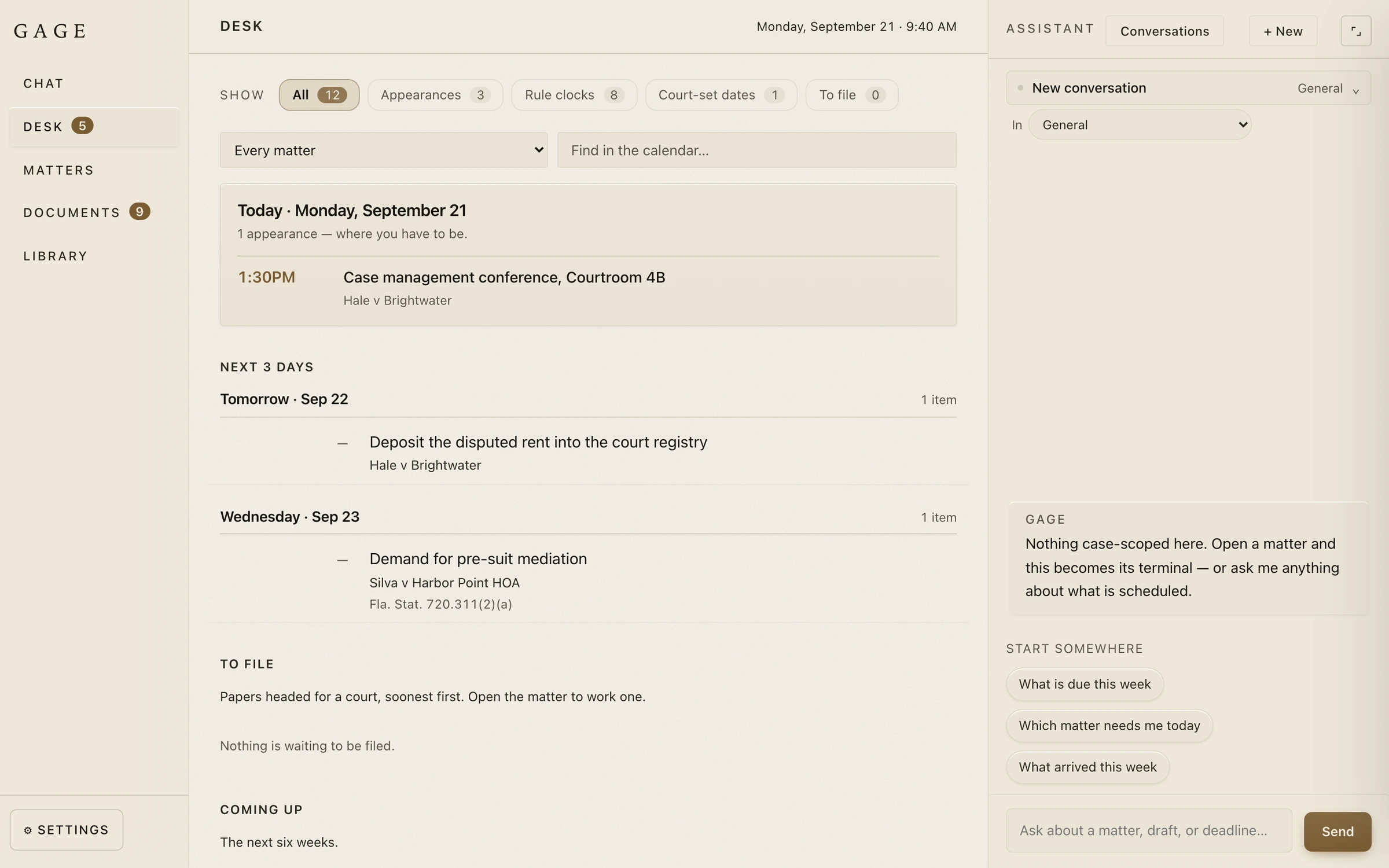
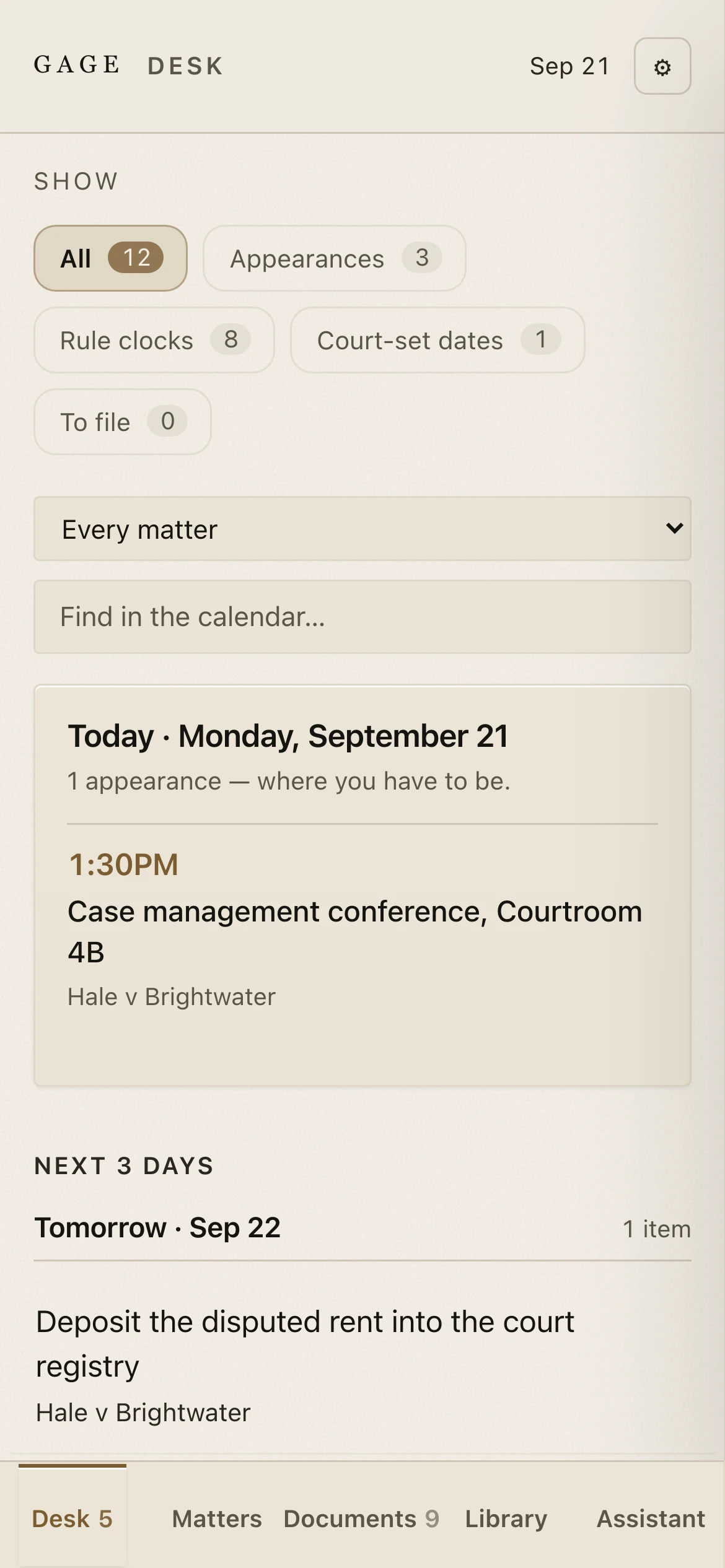
Every matter, every deadline and every draft in one place, with each paper examined before it goes anywhere.
Every matter in one file: its papers, evidence, service, law and deadlines, with what needs you named in a sentence.
The productEvery draft is examined before it goes anywhere, and the defects that get a paper returned are named the way a court would.
The proof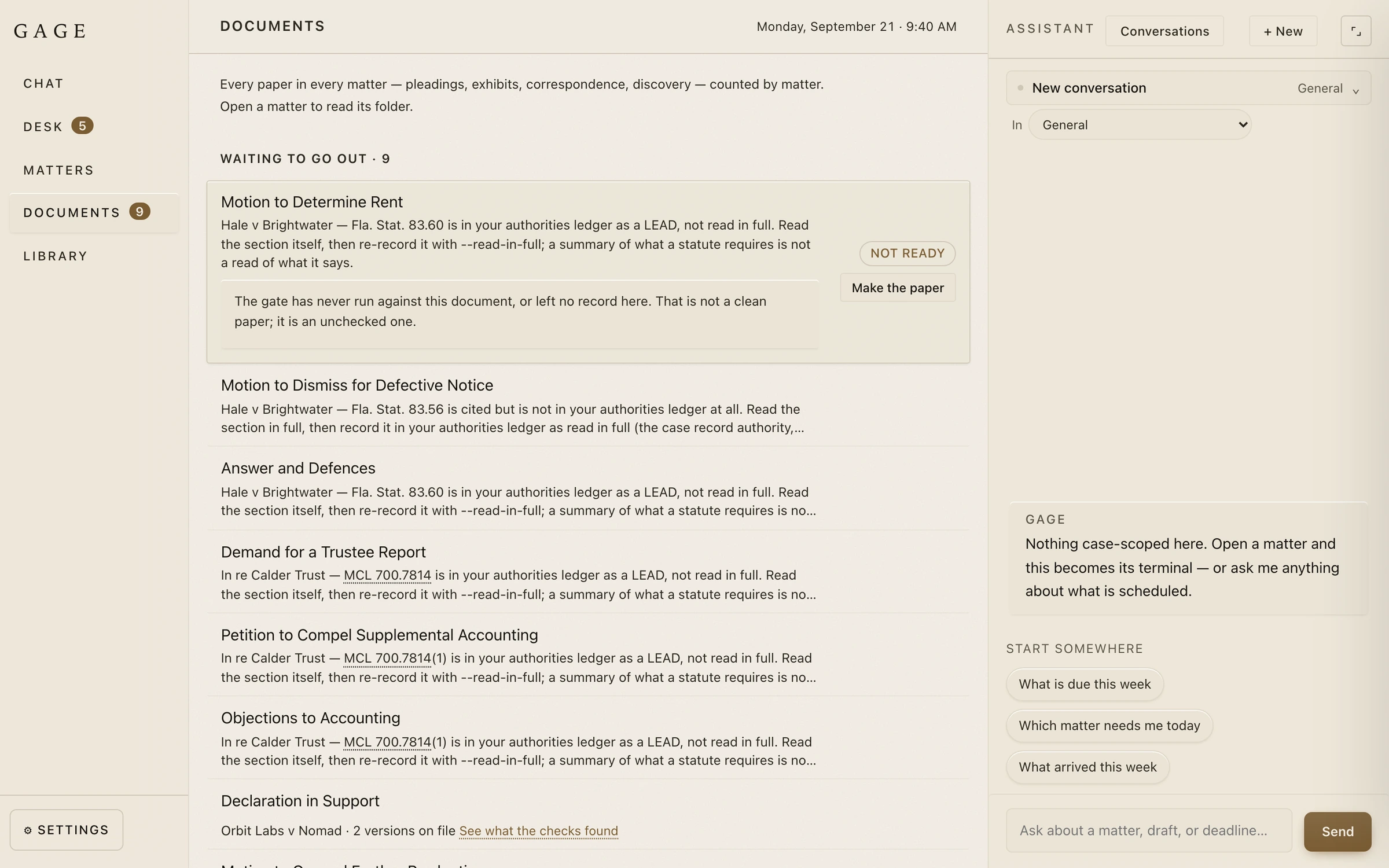
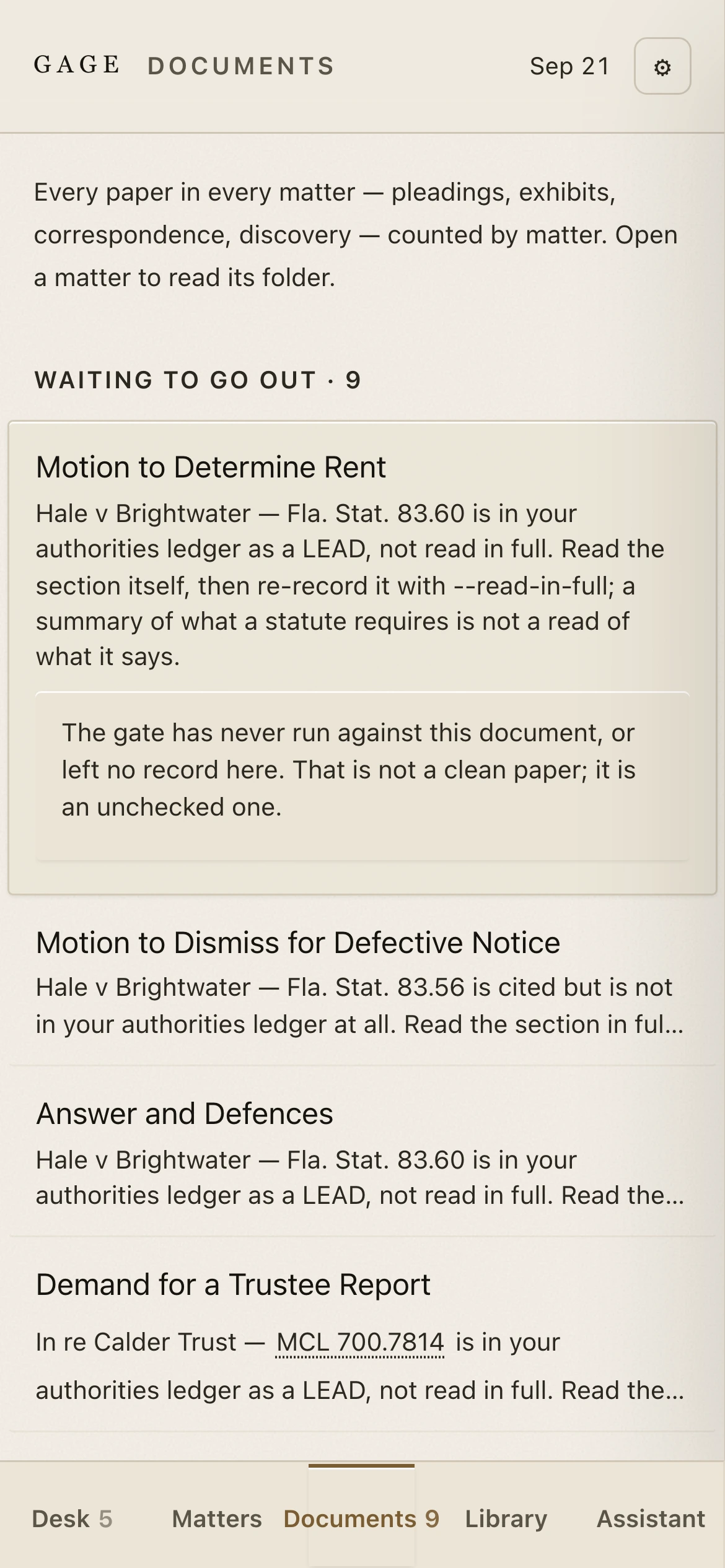
A filing is judged by the clerk and the other side before it is judged on the merits. Every paper here meets that standard first.
Read in full
No snippet, headnote or summary stands in for an opinion. An authority enters your paper only after its full text has been read and recorded.
Every citation resolved
Every citation is resolved against 18,124,047 reporter citations before it reaches you.
Nothing files unexamined
Authority, argument, form, forum, sources, exhibits, service, dates, parties and numbers, measured on the finished page the way a clerk measures it.
The corpus and the filing gate are the same for everyone. What an engagement adds is that the work becomes yours: private, kept apart from every other matter, and reviewable line by line before anything carries your name.
Signed releases, approvals bound to the exact document, encryption in transit, and a tier that answers only on hardware we own.
Signed releases
Every release is signed with Ed25519 and verified before it installs.
Approvals bound to the page
An approval records the SHA-256 digest of the exact document approved.
Encrypted in transit
TLS 1.3 on the web, and the kit reaches our gateway over HTTPS inside a private WireGuard network.
Kept on your machine
Matters, evidence and drafts stay on the computer the kit runs on.
A sovereign tier
Questions answered only on hardware we own, and the question text is not stored.
Hardened at the edge
Rate limits and signed-in sessions are enforced before a request reaches the application.